by Yvette Ribemont
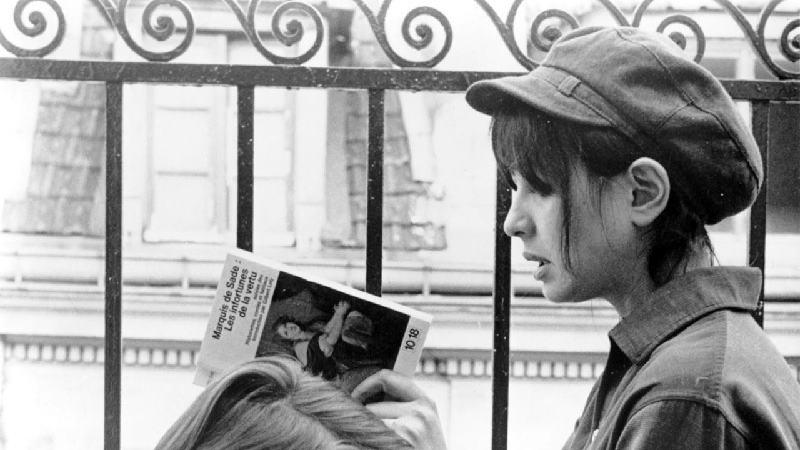
What’s in a name? Everything, if that name is Donatien Alphonse François, Marquis de Sade. Most people would not be able to reel off those forenames but mention the Marquis de Sade in almost any country that provides a reasonably broad education and the associations will be immediate: brutality, perversion, male dominance; the worst excesses, in fact, of sexual depravity. There are very few examples of writers whose names have entered language as concepts. It is possible of course to make adjectival forms of the names of many writers, but rarely have they entered common parlance. Notable exceptions are, in the world of drama, ‘Shakespearean,’ ‘Brechtian,’ and ‘Pinteresque,’ and, in that of the novel, ‘Dickensian’ and ‘Kafkaesque.’ There are not many more. ‘Sade’ has been given the additional honour of becoming an ‘-ism’. Sadism is a way not only of looking at the world but of interacting with it and philosophizing about it.
Despite there being general agreement on what constitutes sadism, there is less agreement on what form of the family name one should use. When referring to the Marquis by his family name only, should one call him ‘de Sade’ or just ‘Sade?’ French dictionaries and other authorities provide a bewildering array of options for the use of the de, and ordinary native French speakers also disagree, except on one point: that it depends on the circumstances. Simone de Beauvoir and Pierre Klossowski preferred ‘Sade’, and many American writers have followed their examples. Biographers have varied. I have opted to refer to the family name always as de Sade’, partly to maintain continuity with usage in works by him that have already been published by Hesperus Press, and partly out of the conviction that this form is more acceptable in British English—one talks after all of ‘de Gaulle and not ‘Gaulle, and indeed of ‘de Beauvoir’ herself!
Before it became notorious, the name had an interesting and illustrious history. Its origins are shrouded in legends, one even claiming derivation from one of the three Magi. The first known representative of the family was Louis de Sade, provost of Avignon in 1177, who paid for the construction of the famous bridge there. His descendants maintained and restored the bridge, and the de Sade coat of arms can still be seen on the first arch of the bridge. It seems likely that the family came originally from Italy. The name is spelt variously in ancient documents as ‘Sado’ or ‘Sadone’, and sometimes ‘Sauze’ or ‘Saze’. It may therefore be that the family took its name from a small town in Languedoc called Saze, on the banks of the Rhône, not far from Avignon. Over the centuries the family developed many prestigious connections, through marriage, with other local noble families, and with the papacy. It was also renowned for its military exploits.
Another legend, for which there is stronger (though disputed) evidence, is that Laura, the woman immortalized as a symbol of spiritual perfection in the work of the early-fourteenth-century poet Francesco Petrarca (Petrarch), was related by marriage to the de Sade family. According to the Abbé de Sade, the Marquis’ uncle, who researched the family archives thoroughly, she was the wife of Hugues de Sade. Argument has raged ever since, and the matter has never been satisfactorily settled. Many other distinguished figures, however, can be attributed to the family without doubt; these figures include magistrates, governors, papal chamberlains, diplomats, abbés, abbesses and nuns. It is against the background of this distinguished lineage that reactions to the Marquis’ notorious behaviour must be seen.
The notion of corrupt nobility has always been associated with de Sade. Hence, he is often referred to, in one breath, as the ‘Marquis de Sade’. It is interesting to note that after his father’s death he was eligible to use the title of ‘Count’, but he had little fondness for it, and only used it when it benefited him in some way. Already in his own lifetime the ‘Marquis de Sade’ was becoming the stuff of legend. He was happy to use pseudonyms however as it suited him: “Comte de Mazan’ when pursued by the police, and ‘Louis Sade’ or ‘Citizen Sade out of political expediency at the time of the French Revolution. In his own epitaph, never put on his grave, but found in manuscript form in the family archives, he refers to himself simply as ‘D.A.F. Sade, Prisoner under Every Regime. Exactly why he had to spend so much of his life in prison must be the central focus of any biography of a man who, despite circumstances that would have destroyed most other mortals, managed to produce some of the most original and imaginative writing of his age.
-Y.R.
 Current Issue
Leave a comment