Category: Uncategorised

  • Labyrinth of Incarnations: On the Essays of Maurice Merleau-Ponty

    Edward W. Said

    According to Emile Bréhier, the distinguished philosopher and historian of philosophy, the major task faced by French thinkers of the early twentieth century was to re-situate man in what he aptly describes as “the circuit of reality.” The theories of which Bergson and Durkheim, for example, were heirs had isolated man in a limbo, in order that “reality,” or whatever was left when man was lifted aside, could be studied. Mechanism, determinism, sociologism: a variety of sometimes simple and sometimes ingenious keys kept unlocking doors that led further away from what philosophers like Gabriel Marcel and Jean-Paul Sartre were later to call “lived”—as opposed to general, universal, abstract or theoretical—“life.” The discrediting of these “isms,” which began as a useful polemic, has, since the middle 1930s, become a sophisticated and frequently tangled strand of intricate philosophizing, not without its moments of fatuous elegance (at which the French are masters) but more frequently studded with works of enduring importance. Whether it calls itself Marxism, existentialism, or phenomenology, the thought of this period (from about 1936 onward) almost always concerns itself with concrete situations—a key phrase—rather than with abstractions, with precise methodology but not with universal principles. Somehow, it manages also to be highly adventurous and speculative and yet markedly anti-theoretical, a paradox that keeps occurring to the reader for whom antitheses of this sort are still novel and troubling. Moreover, even the Marxists (the best of them, that is) join in attacking the doctrine of simple causation, a doctrine that satisfies no one and often arouses ridicule because of its pallid rigidity. All in all, causation, abstract theory, and “unsituated” discussion are as irrelevant as possible to the generality of recent French thought. Their uselessness to this thought is best illustrated by the way in which Zeno’s paradox of Achilles and the tortoise is invalidated by actual motion.

    The fall of France in 1940 considerably strengthened the impulse to discredit mechanistic or reductive philosophy, and generated an impatience with a sort of ossified precision that seemed incapable of touching man. What had previously been a debate between professional philosophers turned into almost national reaction to a social, spiritual, moral, and even military posture that was simply not ready for the brutalities of history. In a sense, the mode of

    philosophy changed from inbred professionalism to humanistic amateurism. The war caught up and made overt what had been stirring beneath the surface of French life, the conflict between what M. Bréhier calls the stability of principles and the shifting variety of human experience. Like the Maginot Line, these fixed principles buckled as the waves of an onrushing and terrible experience assaulted them with catastrophic effect. It is ironic, of course, that German thought—that of Marx, Edmund Husserl, and Martin Heidegger in particular—played a considerable part in the intellectual turnabout. For what these philosophers brought to the attention of their French disciples was an awareness that the starting point of any philosophical enterprise is man’s own life, which can neither be left unexamined nor conveniently herded under some theoretical rubric. A corollary to this notion is one with which current Anglo-Saxon philosophy, normally hostile to the style of Continental philosophizing, concurs: the central importance of language to human experience. In a sense, philosophy has passed from the study of economic- behavioral-psychological man to the study of linguacentric man. Immanence —or the meaning embedded in human, lived reality—is now the central theme of French philosophy, and in the work of Maurice Merleau-Ponty it has received extraordinarily rich, passionate, and complex treatment.

    Like his long-time friend Jean-Paul Sartre, Merleau-Ponty was a prewar normalien who then did the usual tour of pedagogic duty at a provincial lycée before military service in 1939. During the war, he worked with the Resistance while teaching philosophy at the Lycée Carnot. In 1945, with Sartre, he founded Les Temps Modernes and contributed unsigned as well as signed political and philosophical articles to it until the two men broke with one another: their friendship, according to Sartre, was difficult and very often strained. Sartre, incidentally, wrote a remarkable portrait of Merleau-Ponty just after the latter’s death in 1961; not only is it the most interesting and personal study of Merleau-Ponty but it is Sartre at his best, complex and clear at the same time, full of sympathy and a kind of baffled understanding for his problematic subject. One wonders how two such different men could have been friends for so long (Sartre suggests coyly that what kept them together was his great respect for Merleau-Ponty—who, he says, had achieved maturity and had “learned history” sooner than his fellows). They complement each other: Sartre with his expansive genius, pushing out in form after form, restlessly exploring one literary and philosophic mode after another; Merleau-Ponty with his brooding, concentrated power of mind, gathering in his experience and his thoughts, his writing becoming more and more dense, its texture thicker and tighter. Both are great synthesizers, but Sartre’s style is essentially centrifugal, Merleau-Ponty’s centripetal. Their

    disagreement in 1950 reached a climax during the Korean war. Merleau- Ponty, ever a stoic realist, became convinced that words meant nothing (he said he would commit suicide now by going to New York to work as an elevator boy). Naked force had been let loose. Sartre, though plainly discouraged, was still hopeful that voices could be raised in protest and discussion.

    Between 1945 and 1953, Merleau-Ponty taught for a time in Lyons, and at the Sorbonne. In 1953, he was made professor at the Collège de France; the chair he was given—he was the youngest man ever named to it—had previously been held by Bergson and by Etienne Gilson. Merleau-Ponty died suddenly in 1961 at the age of fifty-three, his work, at least as he had sketched out its future outlines, only begun. His death came eight years after his mother’s, when, by his own admission to Sartre, one-half of his life had been destroyed. Furthermore, he claimed never to have recovered from an incomparable childhood. Sartre surmises that Merleau-Ponty’s incurable dislike of the philosophy that is practiced as an elevated survey probably was derived from his desire to investigate man’s preconscious history, his natal attachments to the world. This is not as fanciful a conjecture as it sounds. For Merleau-Ponty’s central philosophic position, insofar as one can be articulated for him, is that we are in and of the world before we can think about it. Perception, to which he devoted his major philosophic labors, is a crucial but complex process that reasserts our connection with the world and thereby provides the basis for all our thought and meaning-giving activity. This, put very simply, is what makes him a phenomenologist. His aim is to rediscover experience at the “naïve” level of its origin, beneath and before the sophisticated encroachments of science. Phenomenology approaches experience as a novelist or poet approaches his subject, from within, but it is not at all anti-scientific; on the contrary, its aim is to put science on a proper footing and to restore it to experience.

    On the surface, Merleau-Ponty’s life seems to have been relatively uneventful, and therefore of little interest to the student of his thought. But, as Werner Jaeger showed in his magistral study of Aristotle, one of the most significant aspects of a philosopher’s work is the connection between the development of his thought and the tenor of his life. Merleau-Ponty’s earliest works were published as his thesis for the docteur ès lettres in 1945: The Structure of Behavior and Phenomenology of Perception. These large, careful, laborious volumes, filled with recondite examples from science (physics, biology, and psychology), were an attempt to free the mind from the bonds of pure empiricism at one extreme, and idealism at the other. These two

    doctrines subsumed what Merleau-Ponty took to be the major fallacies of philosophy. Empiricism argued the sufficiency of practical observation and experiment, but was forced to resort to extra-empirical concepts to unify and give meaning to the results of these observations. A neurosis, for instance, can’t be understood merely by adding together all its symptoms, since a neurosis is something more than the sum of its parts: it is a working whole, or Gestalt, in action. Idealism, on the other hand, taught the primacy of abstract wholes that pertain to some realm of which, by definition, we can have no experience, and the ascendancy of mind over matter. Merleau-Ponty confutes this latter belief by attention to the body’s crucial role in our experience. Truth, he concludes, is based on what is real—and that is our perception of the world: perception becomes “not presumed true,” but may be “defined as access to truth.” He goes on to say, in Phenomenology of Perception, that “the world is not what I think, but what I live through. I am open to the world, I have no doubt that I am in communication with it, but I do not possess it; it is inexhaustible. ‘There is a world,’ or rather: ‘There is the world’; I can never completely account for this ever-reiterated assertion in my life.” Merleau- Ponty’s efforts to account for the assertion are the positive aspect of the two volumes: he shows how human reality can best be understood in terms of behavior (action given form) which is neither a thing nor an idea, neither entirely mental nor entirely physical. Instead of rushing from one absolute incompatibility to another, torn between them, his mode of thought is dialectical, weaving among realities without absolutes. His philosophy thus took as its province what he was later to call “the constantly experienced moment.”

    The two works clearly pertain both to the war experience and to the immediate postwar years. Whatever remained of “pure” thought, “pure” morality, “pure” anything, he wrote a little later, was unlearned; “we learned a kind of vulgar immoralism, which is healthy.” His task was to open men to their experience—they had been, like their country, virtually raped by history. One thinks of Yeats’s “Leda” sonnet and then of Merleau-Ponty struggling to muster knowledge equal to the power of so devastating an experience. It was no longer a question of finding ways to churn up new secrets about man— which is the characteristic prejudice of late nineteenth-century philosophy and psychology. With his usual uncanny precision, André Malraux has one of the characters in his Les Noyers de l’Altenburg, a wartime novel, reject classical (and presumably Freudian) psychology exactly because man’s secrets have nothing to do with man’s humanity. Merleau-Ponty’s thought is best understood not as a way of uncovering new truths about man but as a way of intensifying participation in human experience. One does not read his work to

    discover what one had not known before. Instead, one is readmitted from distraction to one’s own experience, as is the case when one reads Proust (an author from whom Merleau-Ponty quotes a great deal). There is also a curious resemblance here to the Platonic doctrine of recollection. This is why, as I suggested earlier, philosophy ceases to be a privileged, professional activity to which only initiates are admitted; the language, the techniques, the biases ought to be available to all, for we are amateurs together, subjected to contingency, to “the metamorphoses of fortune,” to “facticity,” and to death.

    Almost everything that Merleau-Ponty wrote after 1945 was originally cast in essay form—big books, with their forced systematic unity that draws one further into its clutches, were less open to the vagaries of human experience. His penchant for shorter forms is reminiscent of Wittgenstein’s, for whom writing was less a delivery of finished thought than a series of moments fully embedded in experience. In the Tractatus, Wittgenstein mirrors Merleau-Ponty’s wonder at the world’s presence in and around us: “Not how the world is, is the mystery, but that it is.” (Interestingly, Georg Lukács, who admits the sincerity of Merleau-Ponty’s work, upbraids him for his “mystical” attitude to history and reality.)

    The great themes of Merleau-Ponty’s essays are language, art, psychology, and politics, and the three major volumes form part of the integral translation of his work undertaken in an extraordinary project at Northwestern University Press.1 The earliest essays, those in Sense and Non-Sense, date from between 1945 and 1947. Those in Signs are later efforts from 1958 on, and those in The Primacy of Perception contain not only some early pieces but also the last work published during his lifetime, “Eye and Mind.” (Between Sense and Non-Sense and Signs, he wrote two volumes of political philosophy with particular attention to contemporary Marxism: Humanism and Terror and The Adventures of Dialectic. In 1964, a volume gleaned from his notes, Visible and Invisible, appeared in Paris.) His very earliest essays excepted, Merleau- Ponty’s style of exposition in these volumes is novel and at first hard to fathom. For he disdains point-by-point logic, preferring instead to explore his theme laterally and obliquely, in a manner strikingly reminiscent of R. P. Blackmur’s—whose interest in “gesture” Merleau-Ponty shares. This style is consistent with his belief that philosophy, or serious discourse, is “as real as the world of which it is a part,” and is “the act whereby we take up this unfinished world in an effort to complete and conceive it.” Unlike Sartre’s assertion that we are condemned to freedom, Merleau-Ponty’s quieter realism illustrates that we are condemned to meaning; in all its aspects, our life is our way of giving meaning to the brute fact of existence. This analysis is a more

    sober version of Gerard Manley Hopkins’ exuberant “the world is bursting with meaning.” Thus, in a wonderful phrase, Merleau-Ponty speaks of the world’s prose, by which he means not that we are a tabula rasa on which the world writes, but that we express the world, its sense and non-sense, what is visible and what we experience even if it is invisible—for expression and gesture are the basic human prerogatives.

    Finally, we find that the perceived world, in its turn is not a pure object of thought without fissures or lacunae; it is rather, like a universal style shared in by all perceptual beings…. Before our undivided existence the world is true; it exists. The unity, the articulation of both are intermingled. We experience it in a truth which shows through and envelops us rather than being held and circumscribed by our mind.

    Yet, we are condemned to meaning, and this is the other side of the coin, in much the same way that Joseph K. in The Trial is enmeshed in the Parable of the Law, forced to spin meaning after meaning for it, challenged endlessly by its seemingly inexhaustible possibilities. Merleau-Ponty offers no single meaning to existence because he is, as he has been called by one of his critics, a philosopher of ambiguity; Sartre comments a little wryly that Merleau- Ponty lived between a thesis and an antithesis, always unwilling to go to a definite synthesis. Yet, in a recent book on Roland Barthes and “la nouvelle critique,” Serge Doubrovsky laments the loss to the intellectual world of Merleau-Ponty’s great synthesizing powers.

    The fact of the matter is, I think, that Merleau-Ponty’s language is itself the synthesis, however tenuous or difficult, for which Sartre looked. In his studies of perception, Merleau-Ponty had all but obliterated the distinction between mind and matter, as well as all the comforting and helpful antinomies with which philosophy had previously kept itself apart from the more vulgar categories of life: form and content, spirit and body. He discerned instead structures and forms that inhere in human behavior. As he said in one of his most telling phrases, perception not only involves the thinking body but also the incarnated mind. In what is his most original contribution to psychology, Merleau-Ponty demonstrates that we use our body to know the world; space and time are not abstractions but almost-entities that we haunt and inhabit. The body is not an object that receives impressions which the mind then translates in its function as a subject: on the contrary, existence is the dimension of what he calls compresence.

    Properly speaking, then, perception is an activity that clarifies a primordial way of being, a being that lies beneath the level of intelligible discourse. Perception, quite literally, is the way human existence comes into being. In

    his essay called “The Primacy of Perception,” Merleau-Ponty casts his thought as follows:

    The experience of perception is our presence at the moment when things, truths, values are constituted for us; that perception is a nascent logos; that it teaches us, outside all dogmatism, the true conditions of objectivity itself; that it summons us to the tasks of knowledge and action. It is not a question of reducing human knowledge to sensation, but of assisting at the birth of this knowledge, to make it as sensible as the sensible, to recover the consciousness of rationality. This experience of rationality is lost when we take it for granted as self-evident, but is, on the contrary, rediscovered when it is made to appear against the background of non- human nature.

    There cannot be one absolute meaning for existence, since that would presume the intellectualist distinction between transcendent meaning and human existence that Merleau-Ponty decries. His writing does not interpret in the usual sense, for then it would have to be about something; rather, it is already in the dimension of meaning (“we are condemned to meaning”), and its primary job is the articulation of that already present immanence. Not how the world is but that it is. Therefore, says Merleau-Ponty, “expressing what exists is an endless task.” There is a close connection between his manner of discourse and the critical stance of Susan Sontag, whose attitude “against interpretation” more militantly puts the French thinker’s case; both write in and for the period after “the end of ideology.”

    The two incipient dangers of a philosophy like this are, first, the sheer difficulty of interpreting a language that makes no concessions, and, second, a kind of laissez faire attitude to all human activity and to ethics and politics in particular. Merleau-Ponty succumbs to the first danger from time to time, but never to the second. The introduction to Signs, for example, is scarcely decipherable because it is so much like a long conversation already in progress when it begins and not really concluded by the time it is supposedly over. Terms of reference are not always clear, and allusions to people, incidents, and passages in unnamed works lurk everywhere. One hastens to add, however, that it is possible to make out the larger drift of everything Merleau-Ponty wrote because his is the prose of the world in which we now live. From Husserl he borrows the word Lebenswelt, a useful neologism coined by the German phenomenologist to designate the life-world, or life- context and life-situation, of an individual. Merleau-Ponty’s answer to charges against his blatant subjectivity is always that subjectivity is itself a universal, which means that intersubjectivity, or the whole of all existing subjectivity, is the only transcendent value.

    By myself I cannot be free, nor can I be a consciousness or a man; and that other whom I first saw as my rival is my rival only because he is myself. I discover myself in the other, just as I discover consciousness of life in consciousness of death, because I am from the start this mixture of life and death, solitude and communication, which is heading towards its resolution.

    He clearly rejects what Herbert Marcuse has called one-dimensional man on the same grounds that made him in 1950 sharply criticize the Marxists with whose thought he had hitherto sympathized. To allow things to go as they are, whether or not commanded from above by a rationalized and monolithic superstructure, is bad faith. It means the surrender of the distinctively human activity of conscious perception, and hence the resignation of our task “to complete and conceive” the world. He reiterates time and again in his essays that the “broad lines of history,” at least as the Marxists see them, do not determine every single episode in history. “Every historical undertaking is something of an adventure since it is never guaranteed by any absolutely rational structure of things…. Our only recourse is a reading of the present which is as full and as fruitful as possible, which does not prejudice its meaning, which even recognizes chaos and non-sense where they exist, but which does not refuse to discern a direction and an idea in events where they appear.” Still, like Sartre, he freely appreciated (in the essay “Marxism and Philosophy”) what he called Marx’s realistic existentialism, his dialectical mode, and the human order for which he spoke. The final ambiguity between human effort and the inner logic of history was, however, entirely necessary to Merleau-Ponty’s thought. The clarity and superb insight with which he treats Montaigne and Machiavelli in Signs testify to the vital polarity between human self-examination and political realism on which his courageous posture is built.

    Sartre’s description of Merleau-Ponty’s attitude is “smiling moroseness”; at other times, perhaps wishing to balance seriousness with humor, he speaks of Merleau-Ponty’s charming “gaminerie.” Neither description, of course, does justice to Merleau-Ponty’s greatest achievement as a philosopher of language (he was the first contemporary French philosopher of stature to examine language with any seriousness and profundity) and of art—and as Husserl’s most imaginative student. Many months of independent research in the Husserl Archives in Louvain convinced Merleau-Ponty that Husserl, contrary to what had been thought, underwent a decisive change in mid- career. Previously a philosopher whose hope had been the formulation of a universal eidetic (or ideal essence) of mind and language, Husserl, according to Merleau-Ponty, came to realize that the clue to philosophical research was the whole man, considered in his existential situation, his Lebenswelt. From

    believing that a universal grammar could be discovered, Husserl passed to the belief that one’s concern ought to be the “speaking subject,” since there is no such thing as a language that one does not use (the only languages we know are the ones we can use). Language (or “langage,” as it is called by the French to distinguish it from “langue,” and to suggest all forms of human articulation) is man’s principal expressive mode, and, as Merleau-Ponty writes in Sense and Non-Sense, it

    must surround each speaking subject, like an instrument with its own inertia, its own demands, constraints, and internal logic, and must nevertheless remain open to the initiatives of the subject (as well as to the brute contributions of invasions, fashions and historical events), always capable of the displacement of meanings, the ambiguities, and the functional substitutions which give this logic its lurching gait. Perhaps the notion of gestalt, or structure, would here perform the same service it did for psychology, since both cases involve ensembles which are not the pure manifestations of a directive consciousness, which are not explicitly aware of their own principles, and which nevertheless can and should be studied by proceeding from the whole to the parts.

    Structure, I think, here corresponds to Wittgenstein’s notion in the Philosophical Investigations of the “forms of life” which provide language with its inner ontology and rules. Merleau-Ponty’s attention to structure, which he more accurately calls infrastructure (and which has since created a minor intellectual industry in France called le structuralisme), owes its existence to an imaginative combining of Ferdinand Saussure’s linguistics with Husserl’s later philosophy. Saussure had argued that “signs [words] do not signify anything, and that each one of them does not so much express a meaning as mark a divergence of meaning between itself and other signs.” In short, words are diacritical. Each of the national languages, and by analogy each individual’s own idiom, is an indirect language that refers not to objects but to a complex structure (“no Platonic idea”) which is the total lived and organized reality of whoever uses the language. Philosophy ought really to be a study of language—a point of view one appreciates when one reads thinkers as different in aim as Heidegger, whose work is an exploration of one German’s inner reality, Wittgenstein, or the Anglo-American linguistic analysts. The study of language becomes a study in the semiology (as C. S. Peirce called it) of a given society. It has been left to such brilliant speculators as Roman Jakobson and Claude Lévi-Strauss to show how linguistic structures correspond to kinship systems and to the regulating structure of social exchange. Confronted with a phenomenon like magic, Merleau-Ponty writes in Signs, the investigator must think his

    way into the phenomenon, reading or deciphering it. And this reading always consists in

    grasping the mode of exchange which is constituted between men through institutions, through the connections and equivalences they establish, and through the systematic way in which they govern the use of tools, manufactured or alimentary products, magical formulas, ornaments, chants, dances, and mythical elements, as a given language governs the use of phonemes, morphemes, vocabulary, and syntax. This social fact, which is no longer a massive reality, but an efficacious system of symbols or network of symbolic values, is [in] … the depths of the individual.

    Spoken language is only one of a series of concentric circles that surround man in society, for kinship systems, mythology (as Barthes and Lévi-Strauss have shown), political ideas, even household objects are varieties of human expression that correspond to each other and to language. A fully fledged culture—fully situated, that is, in existence—has what Merleau-Ponty and Sartre call a semantic thickness about it. (Here, phrases from linguistics are made to extend beyond a narrowly linguistic frame of reference in order to accentuate the notion that human society is a web of inner bonds.) Thickness suggests the density of human experience felt not only spatially but temporally, the kind of “matter” Henry James so eloquently bewailed the lack of in America when he wrote about Hawthorne. Literature and culture, Merleau-Ponty says in Sense and Non-Sense, are “defined as the progressive awareness of our multiple relationship with other people and the world, rather than as extramundane techniques.” The individual writer, he adds in The Primacy of Perception, “is himself a kind of new idiom, constructing itself, inventing new ways of expression, or diversifying itself according to its own meaning.” Roland Barthes’ book, Le degré zéro de l’écriture, examines the degrees of difference possible for a writer in different societies, and it is an interesting fact that in his later books he turns to semiology, acknowledging his debts not only to Jakobson, Saussure, Lévi-Strauss, and Peirce, but also to Merleau-Ponty.

    Society, then, is a true labyrinth of incarnations, to use one of Merleau- Ponty’s phrases from “Eye and Mind,” the richness of which it is possible to suggest in written language. A “labyrinth” because of a complexity that has no discernible end or beginning, and an “incarnation” because implicit gestural language and outward expression are inseparable, united as man himself is in an indissoluble bond between body and soul. Philosophy, as Merleau-Ponty learns it from Husserl, holds together the human sciences, for it is

    the taking over of cultural operations begun before our time and pursued in many different ways, which we now “reanimate” and “reactivate” from the standpoint of our present. Philosophy lives from this power of interesting ourselves in everything that has been and is

    attempted in the order of knowledge and of life, and of finding a sharable sense in it, as if all things were present to us through our present. The true place of philosophy is not time, in the sense of discontinuous time, nor is it the eternal. It is rather the “living present” (lebendige Gegenwart)—that is, the present in which the whole past, everything foreign, and the whole of the thinkable future are reanimated.

    These words realize and clarify Vico’s in The New Science, where history and culture are shown to be made by man and therefore the first subjects of scholarly enterprise. Merleau-Ponty is linked to the great tradition of European radical humanism in which, as he says in Sense and Non-Sense, man, not Prometheus or Lucifer, is the hero.

    Art is the human activity about which Merleau-Ponty speaks in terms of a unique joy. He says in Sense and Non-Sense that “the joy of art lies in showing how something takes on meaning—not by referring to already established and acquired ideas but by the temporal and spatial arrangements of elements.” Among human faculties, he attaches the greatest importance to sight, for he is convinced that the major advances in art as well as philosophy are made when man sees more of what is there. Like Ruskin’s work, whose program was to show the relevance of seeing well to the spirit of his time, Merleau-Ponty’s essays on film and on Cézanne distinguish the fundamental projects animating the visual arts. In the work of a painter like Cézanne, art is “being present at the fission of Being from the inside.” In his superb essay on “Cézanne’s Doubt” (which with “Eye and Mind” puts Merleau-Ponty’s art criticism alongside Malraux’s, Gombrich’s Illusion and Reality, and Rilke’s Rodin books), he treats the most philosophic of painters as if Cézanne were a phenomenologist assisting, in his work, at the very birth of meaning: “Cézanne simply expressed what they [the faces and objects as he saw them] wanted to say.” Cézanne’s doubt is the essential human difficulty—and Merleau-Ponty’s own—of living at and acknowledging the point where so many opposites converge, where the meaning of our reality is at once threatened and asserted: Now. “Essence and existence, imaginary and real, visible and invisible—a painting mixes up all our categories in laying out its oneiric universe of carnal essences, of effective likenesses, of mute meanings.” The doubt, however, persists, and his final words on Cézanne profoundly reflect on Merleau-Ponty’s own unfinished work, and that inherent yet necessary incompleteness of all human endeavor which is the basis of humanism:

    Yet it was in the world that he had to realize his freedom with colors upon a canvas. It was on the approval of others that he had to wait for the proof of his worth. That is the reason he questioned the picture emerging beneath his hand, why he hung on the glances other people

    directed toward his canvas. That is the reason he never finished working. We never get away from life. We never see our ideas or our freedom face to face.

  • La Vie Bohème

    The Birth of the Underground in 19th Century Paris and London.

    In 1854 self-proclaimed Bohemian George Augustus Sala introduced the readers of a widely circulated Victorian periodical to a clandestine network that had risen to prominence from its base in London, confessing his membership safe in the knowledge that his identity would be kept secret thanks to Charles Dickens’ editorial policy of anonymous signature in Household Words. “The Bohemians I tell of are the gipsies of civilization,” he continued, and though nomadic, predatory, dissipated, and improvident, they had exerted a powerful influence in the social, cultural, and political spheres of the nineteenth-century world.

    Sala’s description of a ‘Bohemian Republic’ evokes associations with the ‘Republic of Letters,’ the intellectual community that fostered long-distance communication between scholars in the Age of Enlightenment. Underpinned by the circulation of handwritten letters, the publishing of papers and pamphlets, and the development of institutional networks through universities and fraternal societies, the Republic of Letters constructed the identity of the universal intellectual and a transnational community in service to scholarship – a metaphysical Republic. Though vastly different in character, Sala’s Bohemian Republic of the nineteenth century functioned in strikingly similar ways. In its birthplace of Paris, writers and artists constructed and embodied a new narrative for the modern artistic life in the metropolis. True to the archetypal nomadism at the heart of the identity, the concept spread rapidly to inspire the foundation of satellite communities in London, New York, and even Melbourne, carried by its nomadic pioneers. With the mechanisms for its development built on the new communications, print, and commercial culture networks of the mid-nineteenth century, Bohemia became a metaphysical Republic.

    In Pascale Casanova’s seminal analysis of modern literary geopolitics, her description of the development of the ‘World Republic of Letters’ could equally be applied to a history of Bohemia, underlining the parallels between the metaphysical Republics. Casanova describes how Paris became

    the capital of a republic having neither borders nor boundaries, a universal homeland exempt from all professions of patriotism, a kingdom of literature set up in opposition to the ordinary laws of states, a transnational realm whose sole imperatives are those of art and literature: the universal republic of letters.

    This article charts a corresponding realm, the Bohemian Republic.

    The story of Bohemia’s cross-Channel, transatlantic, and trans-Pacific migrations remains untold and contradicts the conventional narrative about the birth of Bohemia. Elisabeth Jay’s assertion that Bohemianism was “a mid-century French literary construct finally incomprehensible to the Anglo-Saxon system of values” echoes almost two centuries of commentary confining Bohemia’s borders to the Latin Quarter. In his lauded preface to the 1851 volume of Scènes de la vie de Bohème, Henry Murger, one of Bohemia’s original and most influential chroniclers, declared: “Bohemia neither exists nor could exist anywhere but in Paris.” But not only were successive and interacting Bohemias proclaimed in London, New York, and Melbourne, exerting a major socio-cultural influence in their respective cities, but Paris Bohemia was never exclusively Parisian. It was a cosmopolitan milieu encompassing nomads from many countries, converging in the ‘City of Light.’ In addition, Murger’s Parisian Bohemians were engaged in the dissemination of Bohemia in new territories, as visitors and settlers in the Anglophone satellites of the Bohemian Republic.

    Avowals of Bohemia’s incompatibility with Anglo-Saxon values were made as soon as it emerged. The first Bohemian in English literature, Thackeray’s Becky Sharp, was denounced as “diabolically French” by Quarterly Review critic Elizabeth Rigby. Such impressions have endured. In 1943 V. S. Pritchett pronounced the Englishman constitutionally unbohemian, lacking the romantic and impractical nature intrinsic to the identity. In 1969, Joanna Richardson observed that while nineteenth-century England produced eccentric artists and socially unorthodox writers, “there was no sense of a Bohemian movement; and there was no Bohemian colony.”

    Patrick Brantlinger concurred in a 1983 article entitled ‘Bohemia versus Grub Street,’ comparing the “relentlessly dismal” world depicted in George Gissing’s New Grub Street with the cheerful portrayal of artistic life in George du Maurier’s Trilby, concluding that the contrast is emblematic of the difference between the relative responses to social rationalization and the commercialization of the cultural trades in nineteenth-century Paris and London. The Parisian response, grounded in the romantic tradition, produced Bohemia, “an anarchic association of artists, writers, and students opposed to bourgeois commercialism.” London’s response mounted no such opposition and failed to envisage a new order. Instead, Grub Street “represents the capitulation of writers to commerce.” According to Brantlinger, Paris afforded writers and artists “opportunities for self-expression and for communal association” unavailable in London, fostering an environment in which an enlightened and politically radical Bohemia could flourish. He contrasts the “heady atmosphere of moral experimentation and freedom in Paris” with the reactionary “neoclassical conservatism” of London, concluding that “there was no equivalent for the Bohemia of the Latin Quarter in London, or for that matter anywhere else before the modern era.”

    The texts selected by Brantlinger to support his argument are unsuited to a study of mid-nineteenth-century Bohemia. Both du Maurier’s Trilby and Gissing’s New Grub Street are retrospective reimaginings written in the 1890s. While du Maurier was present at the dawn of the original Parisian and London Bohemias in the 1840s and 1850s, Gissing was not born until 1857. Though du Maurier’s portrayal of Bohemia is derived from experience, Gissing’s portrayal of a “new Grub Street” is drawn from imagination. By mid-century, Grub Street was no longer the physical and symbolic locus of literary production in London that it had been in the Augustan era. Fleet Street and the West End had emerged as the focal points of the press and the theatre, and the “adventurers” who plied their trade in these spaces subscribed to a new identity. While Bohemia inherited important characteristics from the Grub Street tradition, most notably as a site of literary and artistic poverty, much was changed. The Bohemians self-identified, attaching themselves to an identity invested with a transcendental potential. In their satirical representations of Grub Street – in Alexander Pope’s mock-epic poem The Dunciad, or William Hogarth’s painting of The Distrest Poet – the Augustan satirists would never have identified themselves as Grubbeans. Rather, their satire was intended as a criticism of cultural commercialization, which had enabled and encouraged the dunces and hacks to degrade London’s press and theatrical trades.

    By contrast Bohemianism was a self-constructed identity collectively claimed by networks who passionately defended it from external criticism. The establishment of Bohemian institutions and publishing ventures in London challenges Brantlinger’s assertion that there were no opportunities for self-expression and communal association in the capital; in his words,

    Grub street authors did not think of banding together to exert political or social pressure against their society or their partisan employers. They merely tried to overcome poverty by selling their skills, thereby becoming objects of contempt to their betters, to each other, to themselves.

    London’s original Bohemian generations do not match Brantlinger’s model: they banded together in clubs like the Tumbler and the Savage and in joint publishing ventures like The Train magazine, cooperative enterprises replicated in the Bohemias of New York and Melbourne.

    Contradicting notions of Parisian exclusivity, the period between the birth and zenith of Paris Bohemia witnessed numerous declarations and representations of a London Bohemia. A host of late-century memoirists identified a Bohemian network active in London in the 1840s and 1850s, from Pre-Raphaelite William Michael Rossetti to Chartist Thomas Frost. Fleet Street printer John Farlow Wilson maintained that “Bohemianism had a definite meaning in London,” while journalist Thomas Escott believed London Bohemia had “as distinct a local existence as Leicester, and as much a population of its own.” Irish author Justin McCarthy described the London Bohemia he knew as “made up of young newspaper writers, young painters and actors,” united by “late hours of conviviality, much beer… unlimited tobacco… temporary poverty… debt… and… the bond of poor devilship.” This Bohemian network extending across the press, art, and the theatre refutes another of Brantlinger’s criticisms—that London’s cultural trades engendered no unity across the arts. “The Grub Street tradition views writers in isolation from other artists.” On the contrary, London Bohemia was an interdisciplinary enterprise underpinned by professional and social collaboration.

    Depictions of ‘London Bohemianism’ as an oxymoron were derived from the historical enmity between France and England and the subsequent tendency of writers on both sides of the Channel to exaggerate their cultural difference into a polarity for their mutual gratification, defining themselves as opposites and associating disreputable habits with the other. As Linda Colley established, Victorian vilification of France served to consolidate notions of national identity. As a result, in the eyes of many, Bohemia’s Parisian origins precluded its existence in London. When Bohemia migrated across the Channel in the 1840s it was received by a nation at once suspicious of, and seduced by, the idea of France and French culture.

    Failure to fully recognize London Bohemia has produced an incomplete picture of popular culture in Victorian Britain and has distorted impressions of the New York and Melbourne satellites. Bohemia migrated from Paris to London and from there it diffused out to the Anglophone satellites, its migrations underpinned by colonial networks and processes of cultural transfer. London Bohemia shaped the development of these satellites to a greater extent than Paris, and its absence from the conventional narrative has resulted in an incomplete picture of American and Australian Bohemianism.

    Bohemia was endowed with an especial power in its new contexts, where the emergence of the Bohemian Republic coincided with the explosive growth of the “Anglo-World.” The “settler revolution” that fueled the expansion of English-speaking societies across the world in the nineteenth century brought Bohemia within its transit. At a time when Malthusian concepts of migration as a population control pressure valve and ideas about revitalization overseas were prevalent, the Bohemians were part of an “Anglo exodus.” But Bohemia maintained a complex relationship with ideas about ‘Greater Britain.’ As well as products and agents of imperialism, the Bohemians frequently played the role of dissident, registering opposition to the colonial project and the emergent ideologies of Social Darwinism alongside its more familiar critiques of the prevailing orthodoxies of bourgeois society. While Darwin regarded emigrants as conduits of the best of British civilization, the Bohemians were carriers of dissent toward Victorian cultural and ideological forms, in particular the hegemonic notions of respectability and Universal Progress.

    Bohemia’s insurgent relationship to the dominant culture has often been viewed in relation to sexuality. It forms a prominent theme in Sedgwick’s Epistemology of the Closet, where it serves a corresponding and at times intersecting function to the eponymous ‘closet’ – “that curious space both internal and marginal to the culture: centrally representative of its motivating passions and contradictions, even while marginalized by its orthodoxies.” From a position simultaneously despised and tolerated, a small and shadowy group showed the prevailing culture hidden truths about itself, much like the ideal Socratic philosopher. For Sedgwick, Bohemia derived its power from its marginality, and was an inherently sexualized realm. Accepting this premise, Bohemia held its greatest power amidst the anxious climate of the mid-nineteenth-century Anglo-World, where a Puritan revival flourished. Bohemia formed its mirror image, the transgressive other, creating a powerful spectacle of transgression and dissidence.

    The London, New York, and Melbourne Bohemias articulated their corporate identities in strikingly similar ways. Each group established formal and informal social institutions: the Savage Club and the Tumbler Club in London; Pfaff’s in New York; and the Yorick Club in Melbourne. Each group collectively published a Bohemian periodical emanating from these social clubs to serve as the organ of the respective communities, platforms to capitalize on Bohemian sociability through published metanarratives. In each of the cities Bohemia was a collective enterprise, fostering distinctive styles and aesthetics across a range of media and platforms. And in each satellite the Bohemians reached the public chiefly through new genres of journalism and theatre.

    Today the term Bohemian is usually employed as a clichéd adjective, but in the mid-nineteenth century it was a proper noun loaded with meaning, defining particular people, places, lifestyles, genres, and aesthetics. Bohemia denoted a network of creatives who proclaimed their self-exile from and collective resistance to dominant codes of modern morality, and who identified with Bohemianism, a new cultural construct born in Paris. Bohemianism was a creation of its own adherents. They had no established model to draw from: they were fashioning their own identity and constructing their own world creating and promoting a new phenomenon.

    Bohemia attracted the attention of the most celebrated writers of the nineteenth century: Balzac, Baudelaire, Sand, and Flaubert in Paris; Dickens, Thackeray, and Mary Braddon in London; Walt Whitman, Mark Twain, and Bret Harte in New York; Marcus Clarke, Henry Kendall, and Rosa Praed in Melbourne. Each contribution shaped the legend in new ways. Conceptual discourse on Bohemianism has engaged critics, sociologists, and cultural historians ever since its emergence, with theories of Bohemia proposed by some of the most renowned thinkers of the modern era, from Karl Marx to Walter Benjamin, and from Pierre Bourdieu to Raymond Williams. Their contested and contradictory interpretations have produced a farrago of images and meanings, leaving Bohemia a quintessentially indeterminate, amorphous construct.

    -G.S.

  • Manners of Thinking

    by Yvette Ribemont

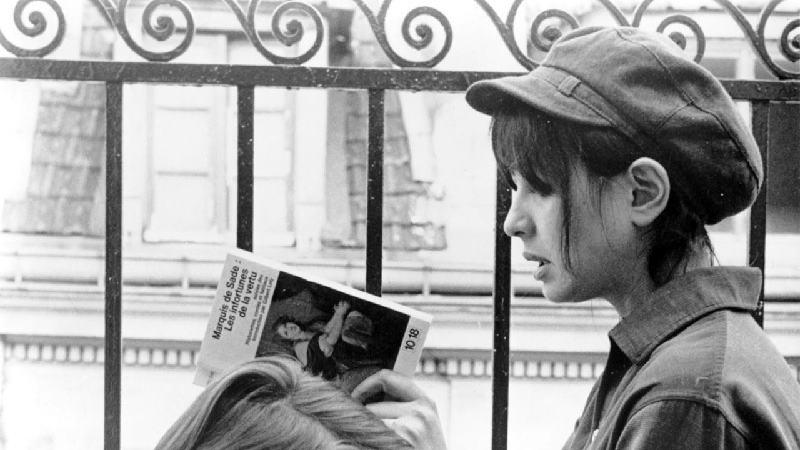
    What’s in a name? Everything, if that name is Donatien Alphonse François, Marquis de Sade. Most people would not be able to reel off those forenames but mention the Marquis de Sade in almost any country that provides a reasonably broad education and the associations will be immediate: brutality, perversion, male dominance; the worst excesses, in fact, of sexual depravity. There are very few examples of writers whose names have entered language as concepts. It is possible of course to make adjectival forms of the names of many writers, but rarely have they entered common parlance. Notable exceptions are, in the world of drama, ‘Shakespearean,’ ‘Brechtian,’ and ‘Pinteresque,’ and, in that of the novel, ‘Dickensian’ and ‘Kafkaesque.’ There are not many more. ‘Sade’ has been given the additional honour of becoming an ‘-ism’. Sadism is a way not only of looking at the world but of interacting with it and philosophizing about it.

    Despite there being general agreement on what constitutes sadism, there is less agreement on what form of the family name one should use. When referring to the Marquis by his family name only, should one call him ‘de Sade’ or just ‘Sade?’ French dictionaries and other authorities provide a bewildering array of options for the use of the de, and ordinary native French speakers also disagree, except on one point: that it depends on the circumstances. Simone de Beauvoir and Pierre Klossowski preferred ‘Sade’, and many American writers have followed their examples. Biographers have varied. I have opted to refer to the family name always as de Sade’, partly to maintain continuity with usage in works by him that have already been published by Hesperus Press, and partly out of the conviction that this form is more acceptable in British English—one talks after all of ‘de Gaulle and not ‘Gaulle, and indeed of ‘de Beauvoir’ herself!

    Before it became notorious, the name had an interesting and illustrious history. Its origins are shrouded in legends, one even claiming derivation from one of the three Magi. The first known representative of the family was Louis de Sade, provost of Avignon in 1177, who paid for the construction of the famous bridge there. His descendants maintained and restored the bridge, and the de Sade coat of arms can still be seen on the first arch of the bridge. It seems likely that the family came originally from Italy. The name is spelt variously in ancient documents as ‘Sado’ or ‘Sadone’, and sometimes ‘Sauze’ or ‘Saze’. It may therefore be that the family took its name from a small town in Languedoc called Saze, on the banks of the Rhône, not far from Avignon. Over the centuries the family developed many prestigious connections, through marriage, with other local noble families, and with the papacy. It was also renowned for its military exploits.

    Another legend, for which there is stronger (though disputed) evidence, is that Laura, the woman immortalized as a symbol of spiritual perfection in the work of the early-fourteenth-century poet Francesco Petrarca (Petrarch), was related by marriage to the de Sade family. According to the Abbé de Sade, the Marquis’ uncle, who researched the family archives thoroughly, she was the wife of Hugues de Sade. Argument has raged ever since, and the matter has never been satisfactorily settled. Many other distinguished figures, however, can be attributed to the family without doubt; these figures include magistrates, governors, papal chamberlains, diplomats, abbés, abbesses and nuns. It is against the background of this distinguished lineage that reactions to the Marquis’ notorious behaviour must be seen.

    The notion of corrupt nobility has always been associated with de Sade. Hence, he is often referred to, in one breath, as the ‘Marquis de Sade’. It is interesting to note that after his father’s death he was eligible to use the title of ‘Count’, but he had little fondness for it, and only used it when it benefited him in some way. Already in his own lifetime the ‘Marquis de Sade’ was becoming the stuff of legend. He was happy to use pseudonyms however as it suited him: “Comte de Mazan’ when pursued by the police, and ‘Louis Sade’ or ‘Citizen Sade out of political expediency at the time of the French Revolution. In his own epitaph, never put on his grave, but found in manuscript form in the family archives, he refers to himself simply as ‘D.A.F. Sade, Prisoner under Every Regime. Exactly why he had to spend so much of his life in prison must be the central focus of any biography of a man who, despite circumstances that would have destroyed most other mortals, managed to produce some of the most original and imaginative writing of his age.

    -Y.R.

  • Conversations With Brecht

    by Walter Benjamin

    1934—27 September at Dragor: In a conversation a few evenings ago, Brecht spoke of the curious indecision which at the moment prevents him from making any definite plans. As he is the first to point out, the main reason for this indecision is that his situation is so much more privileged than that of most other refugees. Therefore, since in general he scarcely admits that emigration can be a proper basis for plans and projects, he refuses all the more radically to admit it as such in his own case. His plans reach out to the period beyond emigration. There, he is faced with two alternatives. On the one hand there are some prose projects waiting to be done: the shorter of the two—a satire on Hitler in the style of the Renaissance biographers—and the longer of the two a novel. This is to be an encyclopedic survey of the follies of the intellectual; it seems that it will be set, in part at least, in China. A small model for this work is already completed. But besides these prose projects he is also preoccupied by others, dating back to very old studies and ideas. Whereas he was able, at a pinch, to set down in his notes and introductions to the Versuche the thoughts which occurred to him within the scope of epic theatre, other thoughts, although originating in the same interests, have become combined with his study of Leninism and of the scientific tendencies of the empiricists, and have therefore outgrown that rather limited framework. For several years they have been subsumed, now under one key concept, now under another, so that non-Aristotelian logic, behaviorist theory, the new encyclopedia and the critique of ideas have, in turn, stood at the center of his preoccupations. At present these various pursuits are converging upon the idea of a philosophical didactic poem. But he has doubts about the matter. He wonders, in the first instance, whether, in view of his output to date and especially of its satirical elements, particularly the Ibreepenny Novel, the public would accept such a work. This doubt is made up of two distinct strands of thought.

    Whilst becoming more closely concerned with the problems and methods of the proletarian class struggle, he has increasingly doubted the satirical and especially the ironic attitude as such. But to confuse these doubts, which are mostly of a practical nature, with other, more profound ones would be to misunderstand them. The doubts at a deeper level concern the artistic and playful element in art, and above all those elements which, partially and occasionally, make art refractory to reason. Brecht’s heroic efforts to legitimize art vis-à-vis reason have again and again referred him to the parable in which artistic mastery is proved by the fact that, in the end, all the artistic elements of a work cancel each other out. And it is precisely these efforts, connected with this parable, which are at present coming out in a more radical form in the idea of the didactic poem. In the course of our conversation I tried to explain to Brecht that such a poem would not have to seek approval from a bourgeois public but from a proletarian one, which, presumably, would find its criteria less in Brecht’s earlier, partly bourgeois-oriented work than in the dogmatic and theoretical content of the didactic poem itself. ‘If this didactic poem succeeds in enlisting the authority of Marxism on its behalf,’ I told him, ‘Then your earlier work is not likely to weaken that authority.’

    4 October Yesterday Brecht left for London. Whether it is that my presence offers peculiar temptations in this respect, or whether Brecht is now generally more this way inclined than before, at all events his aggressiveness (which he himself calls ‘baiting’) is now much more pronounced in conversation than it used to be. Indeed, I am struck by a special vocabulary engendered by this aggressiveness. In particular, he is fond of using the term Würstchen (little sausage). In Dragor I was reading Dostoyevsky’s Crime and Punishment. To start with he blamed this choice of reading for my being unwell. As confirmation he told how, in his youth, a prolonged illness (which had doubtless been latent for a long time) had begun when a schoolfellow had played Chopin to him on the piano and he had not had the strength to protest. Brecht thinks that Chopin and Dostoyevsky have a particularly adverse effect on people’s health. In other ways, too, he missed no opportunity of needling me about my reading matter, and as he himself was reading Schweyk at the time he insisted on making comparative value judgements of the two authors. It became evident that Dostoyevsky simply could not measure up to Hasek, and Brecht to him without further ado among the Würstchen; only a little more and he would have extended to Dostoyevsky the description he keeps ready, these days, for any work which lacks an enlightening character, or is denied such character by him: he calls such a work a Klump (lump, or clot).

    1938—28 June: I was in a labyrinth of stairs. This labyrinth was not entirely roofed over. I climbed; other stairways led downwards. On a landing I realized that I had arrived at a summit. A wide view of many lands opened before me. I saw other men standing on other peaks. One of these men was suddenly seized by dizziness and fell. The dizziness spread; others were now falling from other peaks into the depths below. When I too became dizzy, I woke up.

    On 22 June I arrived at Brecht’s.

    Brecht speaks of the elegance and nonchalance of Virgil’s and Dante’s basic attitude, which, he says, forms the backdrop to Virgil’s majestic gestus. He calls both Virgil and Dante promeneurs. Emphasizing the classic rank of the Inferno, he says: ‘You can read it out of doors.’ He speaks of his deep-rooted hatred of priests, a hatred he inherited from his grandmother. He hints that those who have appropriated the theoretical doctrines of Marx and taken over their management will always form a clerical camarilla. Marxism lends itself all too easily to ‘interpretation’. Today it is a hundred years old and what do we find? (At this point the conversation was interrupted). “The State must wither away.” Who says that? The State.’ (Here he can only mean the Soviet Union). He assumes a cunning, furtive expression, puts himself in front of the chair in which I am sitting-he is impersonating ‘the State’ and says, with a sly, side-long glance at an imaginary inter-locutor: ‘I know I ought to wither away?

    A conversation about new Soviet novels. We no longer read them. The talk then turns to poetry and to the translations of poems from various languages in the USSR with which Das Wort is flooded. He says the poets over there are having a hard time. If Stalin’s name doesn’t crop up in a poem, that’s interpreted as a sign of ill intent.’

    29 June: Brecht talks about epic theatre, and mentions plays acted by children in which faults of performance, operating as alienation effects, impart epic characteristics to the production. Something similar may occur in third-rate provincial theatre. I mention the Geneva production of Le Cid where the sight of the king’s crown worn crookedly on his head gave me the first inkling of the ideas I eventually developed in the Trauerspiel book nine years later. Brecht in turn quoted the moment at which the idea of epic theatre first came into his head. It happened at a rehearsal for the Munich production of Edward II. The battle in the play is supposed to occupy the stage for three-quarters of an hour. Brecht couldn’t stage-manage the soldiers, and neither could Asya (Lacis), his production assistant. Finally, he turned in despair to Karl Valentin, at that time one of his closest friends, who was attending the rehearsal, and asked him: ‘Well, what is it? What’s the truth about these soldiers? What about them?’ Valentin: ‘They’re pale, they’re scared, that’s what!’ The remark settled the issue, Brecht adding: ‘They’re tired.’ Whereupon the soldiers’ faces were thickly made up with chalk, and that was the day the production’s style was determined.

    Later the old subject of ‘logical positivism’ came up. I adopted a somewhat intransigent attitude and the conversation threatened to take a disagreeable turn. This was avoided by Brecht admitting for the first time that his arguments were superficial. This he did with the delightful formula: ‘A deep need makes for a superficial grasp? Later, when we were walking to his house the conversation had taken place in my room): It’s a good thing when someone who has taken up an extreme position then goes into a period of reaction. That way he arrives at a half-way house.’ That, he explained, was what had happened to him: he had become mellow.

    I July: Whenever I refer to conditions in Russia, Brecht’s comments are highly skeptical. When I inquired the other day whether Ottwald was still in gaol (in colloquial German: whether he was ‘still sitting), the answer was: If he can still sit, he’s sitting? Yesterday Gretl Steffin expressed the opinion that Tretyakov was no longer alive.

    4 July: Brecht during a conversation on Baudelaire last night: I’m not against the asocial, you know; I’m against the non-social?

    2I July: The publications of Lukács, Kurella et al are giving Brecht a good deal of trouble. He thinks, however, that one ought not to oppose them at the theoretical level. I then put the question on the political level. Here he does not hold his punches. ‘Socialist economy doesn’t need war, and that is why it is opposed to war. The “peace-loving nature of the Russian people” is an expression of this and nothing else.

    There can’t be a socialist economy in one country. Rearmament has inevitably set the Russian proletariat a long way back in history, back to stages of historical development which have long since been overtaken among others, the monarchic stage. Russia is now under personal rule. Only blockheads can deny this, of course.’ This was a short conversation which was soon interrupted-I should add that in this context Brecht emphasized that because of the dissolution of the First International, Marx and Engels lost active contact with the working-class movement and thereafter gave only advice-of a private nature, not intended for publication-to individual leaders. Nor was it an accident although regrettable that Engels at the end of his life turned to the natural sciences.

    Béla Kun, he said, was his greatest admirer in Russia. Brecht and Heine were the only German poets Kun studied [sic]. (Occasionally Brecht hints at the existence of a certain person on the Central Committee who supports him.)

    25 July: Yesterday morning Brecht came over to my place to read me his Stalin poem, which is entitled ‘The Peasant to his Ox’. At first I did not get its meaning completely, and when a moment later the thought of Stalin passed through my head, I did not dare entertain it. This was the effect Brecht intended, and he explained what he meant in the conversation which followed. In this conversation he emphasized, among other things, the positive aspects of the poem. It was in fact a poem in honour of Stalin, who in his opinion has immense merit. But Stalin is not yet dead. Besides, a different, more enthusiastic manner of honoring Stalin is not incumbent upon Brecht, who is sitting in exile and waiting for the Red Army to march in. He is following the developments in Russia and the writings of Trotsky. These prove that there exists a suspicion justifiable one demanding a skeptical appraisal of Russian affairs. Such skepticism is in the spirit of the Marxist classics. Should the suspicion prove correct one day, then it will become necessary to fight the regime, and publicly. But ‘unfortunately or God be praised, whichever you prefer’, the suspicion is at present not yet a certainty. There is no justification for constructing upon it a policy such as Trotsky’s. ‘And then there’s no doubt that certain criminal cliques really are at work on Russia itself. One can see it, from time to time, by the harm they do. Finally, Brecht pointed out that we Germans have been especially affected by the setbacks we have suffered in our own country. We have had to pay for the stand we took, we’re covered with scars. It’s only natural that we should be especially sensitive.?

    Towards evening Brecht found me in the garden reading Capital. Brecht: I think it’s very good that you’re studying Marx just now, at a time when one comes across him less and less, especially among our people.’ I replied that I prefer studying the most talked-about authors when they are out of fashion. We went on to discuss Russian literary policy. I said, referring to Lukács, Gábor and Kurella: ‘These people just aren’t anything to write home about’ (literally: with these people you can’t make state). Brecht: ‘Or rather, a State is all you can make with them, but not a community. They are, to put it bluntly, enemies of production. Production makes them uncomfortable. You never know where you are with production; production is the unforeseeable. You never know what’s going to come out. And they themselves don’t want to produce. They want to play the apparatchik and exercise control over other people. Every one of their criticisms contains a threat.’ We then got on to Goethe’s novels, I don’t remember how; Brecht knows only the Elective Affinities. He said that what he admired about it was the author’s youthful elegance. When I told him Goethe wrote this novel at the age of sixty, he was very much surprised. The book, he said, had nothing philistine about it. That was a tremendous achievement. He knew a thing or two about philistinism; all German drama, including the most significant works, was stamped with it. I remarked that Elective Affinities had been very badly received when it came out. Brecht: I’m pleased to hear it-The Germans are a lousy nation (ein Scheissvolk). It isn’t true that one must not draw conclusions from Hitler about Germans in general. In me, too, everything that is German is bad. The intolerable thing about us Germans is our narrow-minded independence. Nowhere was there such a thing as the free cities of the German Reich, like that lousy Augsburg. Lyons was never a free city; the independent cities of the Renaissance were city states-Lukács is a German by choice. He’s got no stuffing left in him, none whatsoever?

    Speaking of The Most Beautiful Legends of Woynok the Brigand by Anna Seghers, Brecht praised the book because it shows that Seghers is no longer writing to order. ‘Seghers can’t produce to order, just as, without an order, I wouldn’t even know how to start writing.’ He also praised the stories for having a rebellious, solitary figure as their central character.

    26 July: Brecht, last night: ‘There can’t be any doubt about it any longer: the struggle against ideology has become a new ideology?

    29 July: Brecht read to me some polemical texts he has written as part of his controversy with Lukács, studies for an essay which is to be published in Das Wort. He asked my advice whether to publish them.

    As, at the same time, he told me that Lukács’s position ‘over there’ is at the moment very strong, I told him I could offer no advice. ‘There are questions of power involved. You ought to get the opinion of somebody from over there. You’ve got friends there, haven’t you?”.

    Brecht: ‘Actually, no, I haven’t. Neither have the Muscovites themselves—like the dead.’

    3 August: On 29 July in the evening, while we were in the garden, the conversation came round to the question whether a part of the Children’s Songs cycle should be included in the new volume of poems. I was not in favor because I thought that the contrast between the political and the private poems made the experience of exile particularly explicit, and this contrast would be diminished by the inclusion of a disparate sequence. In saying this I probably implied that the suggestion once again reflected the destructive aspect of Brecht’s character, which puts everything in danger almost before it has been achieved. Brecht: ‘I know; they’ll say of me that I was manic. If the history of our time is handed down to the future, the capacity to understand my mania will be handed down with it. The times we live in will make a backdrop to my mania. But what I should really like would be for people to say about me: he was a moderate manic.’ His discovery of moderation, Brecht said, should find expression in the poetry volume: the recognition that life goes on despite Hitler, that there will always be children.

    He was thinking of the ‘epoch without history’ of which he speaks in his poem addressed to artists. A few days later he told me he thought the coming of such an epoch more likely than victory over fascism. But then he added, with a vehemence he rarely shows, yet another argument in favor of including the Children’s Songs in the Poems from Exile: We must neglect nothing in our struggle against that lot. What they’re planning is nothing small, make no mistake about it. They’re planning for thirty thousand years ahead. Colossal things. Colossal crimes. They stop at nothing. They’re out to destroy everything. Every living cell contracts under their blows. That is why we too must think of every-thing. They cripple the baby in the mother’s womb. We must on no account leave out the children. While he was speaking like this I felt a power being exercised over me which was equal in strength to the power of fascism-I mean a power that sprang from the depths of history no less deep than the power of the fascists. It was a very curious feeling, and new to me. Then Brecht’s thoughts took another turn, which further intensified this feeling I had. ‘They’re planning devastations on an icy scale. That’s why they can’t reach agreement with the Church, which is also geared to thousands of years. And they’ve proletarianized me too. It isn’t just that they’ve taken my house, my fishpond and my car from me; they’ve also robbed me of my stage and my audience. From where I stand today I can’t, as a matter of principle, admit that Shakespeare’s talent was greater than mine. But Shakespeare couldn’t have written just for his desk drawer, any more than I can. Besides, he had his characters in front of him. The people he depicted were running around in the streets. He just observed their behavior and picked out a few traits; there were many others, just as important, that he left out.’

    Early August: ‘In Russia there is dictatorship over the proletariat. We should avoid dissociating ourselves from this dictatorship for as long as it still does useful work for the proletariat—i.e. so long as it contributes towards an agreement between the proletariat and the peasantry, with predominant recognition of proletarian interests.’ A few days later Brecht spoke of a ‘workers’ monarchy, and I compared this organism with certain grotesque sports of nature dredged up from the depths of the sea in the form of horned fish or other monsters.

    25 August: A Brechtian maxim: ‘Don’t start from the good old things but the bad new ones.’

    Translated by Anna Bostock

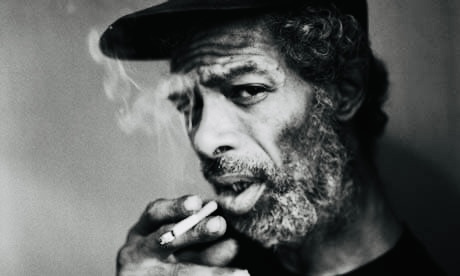
  • Words Are For The Mind

    Gil Scott-Heron

    Life inevitably translates into time. That’s why the sum total of it is called a ‘lifetime.’ Freedom is the potential to spend one’s time in any fashion one determines. I would always want the time invested in my ideas to be profitable, to give the reader something lasting for their investment in me. It is very important to me that my ideas be understood. It is not as important that I be understood. I believe that this is a matter of respect; your most significant asset is your time and your commitment to invest a portion of it considering my ideas means it is worth a sincere attempt on my part to transmit the essence of the idea. If you are looking, I want to make sure that there is something here for you to find.

    The public ‘lifetime’ of an artist is comparable to that of an athlete—about 5 years. From the thousands of individuals who consider themselves candidates for visibility and public notice, few make it. I have been blessed by the grace of the spirits with the public’s attention for nearly six of those lifetimes—songs that I have sung and poems that I have written have been heard on every continent, in every country where people have records and books. How could I possibly complain?

    But even if you have heard my work sung or recited in the past, perhaps reading my poems in the future may offer you a fresh perspective on some of my ideas.

    You don’t think that rap is a brand new style?

    No. In fact folks been rapping for a good little while.

    Which brings us to why I am reluctant to accept the title of ‘Godfather of Rap.’ There still seems to be a need within our community to have what the griot supplied in terms of historical chronology; a way to identify and classify events in black culture that were both historically influential and still relevant. In basketball for example, Michael Jordan was the first ‘Skywalker’ unless you’d seen David Thompson. Dr. J was the only ‘Surgeon and General’ who could rebound like a center, take the ball full court like a guard and dunk like nobody’s business—unless you’d seen Connie Hawkins. In the same way, there were poets before me who had great influence on the language and the way it was performed and recorded: Oscar Brown Jr, Melvin Van Peebles and Amiri Baraka (a.k.a. LeRoi Jones) were all published and well respected for their poetry, plays, songs and a range of other artistic achievements when the only thing I was taping were my ankles before basketball practice.

    It was The Last Poets (both groups), and their percussion-driven group deliveries, who made the recordings which serve to place my title as ‘Godfather’ in question. If there was any individual initiative that I was responsible for, it might have been that there was music in certain poems of mine, with complete progressions and repeating ‘hooks,’ which made them more like songs than just recitations with percussion. I put this down to my background as a piano player prior to my attempts as a songwriter or to writing poems that could be performed in a musical setting.

    The character of those pieces, particularly the early ones, brought about descriptions and analyses from journalists and critics that not only took in the metric and rhythmic values of them as poems or songs, but stumbled to conclusions about our philosophy. Because there were political elements in a few numbers, handy political labels were slapped across the body of our work, labels that maintain their innuendo of disapproval to this day. Words like ‘radical’ and ‘militant’ and ‘muckraker’ stuck out in the reviews like weeds in a rose garden. Those terms were amusing at first because we had no idea that they were terminal. We attributed them to idiots under the pressure of editor-inspired deadlines who had not bothered with the words, but responded only to the street-sound drumbeats that sounded as if they were calling for the revolution that so many journalists in the late ‘60s thought would bring the end of the world.

    So if it ain’t exactly rap, and it ain’t exactly radical militant muckraking, what is it? Because of the contributions of Ron Carter and Hubert Laws on Pieces of a Man and the background of Bob Thiele, the owner-producer of The Flying Dutchman record label as a ‘jazz’ producer, Brian Jackson and I became ‘jazz artists.’ It certainly couldn’t have been because of guitarist Bert Jones or drummer Bernard Purdie, and I doubt if it was because of ‘The Revolution Will Not Be Televised’ or ‘Save The Children.’

    I felt awkward with the jazz label because that associated my efforts at song-writing and piano-playing with Duke Ellington and Miles Davis and Dolphy and Coltrane and…you dig? The closest I thought I would ever get to them was with the song ‘Lady Day and John Coltrane,’ an up-tempo blues tribute to two of my favorite musicians. It was enough to make you think that if you wrote a hymn you got a one-way ticket to heaven.

    So what did we have in total? A militant-radical-muckraker? That’s a great deal of description without even the briefest inference that there might be a piano player in the house.

    I must also admit that some of my poetic ideas have not always been all my own. I rarely wrote lyrics for Brian Jackson melodies without Brian giving me a point of reference for direction. There were also times when I ran into places along the song’s road that I could not navigate, and the song’s lines that completed verses and supports for bridges were given to me by ‘Spirits.’ The lyrics were blessings, and so for me the songs became spirituals.

    I have been blessed because I have had the opportunity to do what I enjoy and find it to be something that others enjoy also. Many of my favorite ideas are in my songs. And I find it kind of people to take an interest. Because they are the most valuable thing I have.

    They represent hours of concentration

    And seconds of spiritual inspiration

    With most of the beauty I have seen

    And what I have learned about what it all means

    To be lifted by ‘the spirits’ and touched from within

    To a place I can smile inside ‘now and then.’

    -Gil Scott-Heron

    (April 1st 1949 – May 27 2011)